
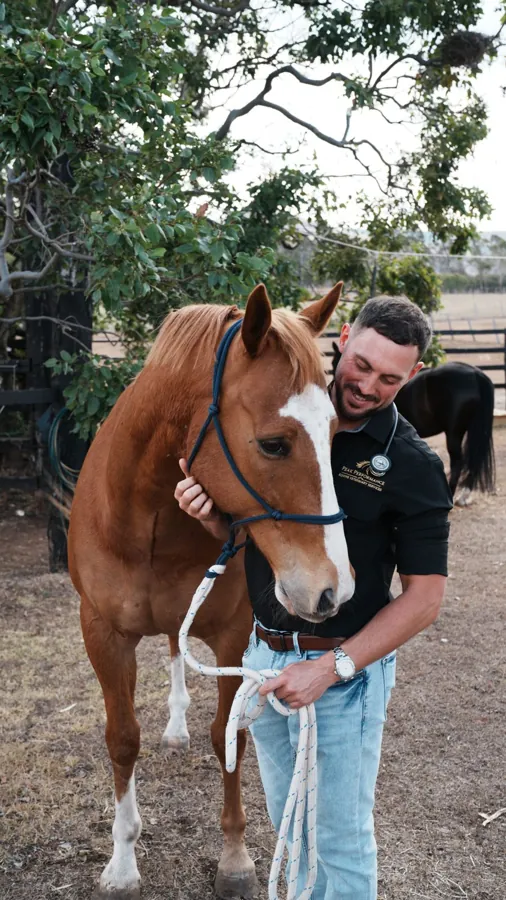
How often should a horse's teeth be checked?
Most adult horses in work should have a dental examination every 12 months, and many benefit from every 6 months. Young horses under five and older horses over about fifteen usually need checking every 6 months because their mouths change faster.
| Age / situation | Suggested interval |
|---|---|
| Foals and yearlings | Check at weaning and yearling stage for congenital problems |
| 2–5 years (teeth erupting, caps shedding) | Every 6 months |
| 5–15 years, in work | Every 6–12 months |
| Over 15 years | Every 6 months |
| Horse with known dental disease | As advised — often every 3–6 months |
Christian will recommend an interval for each horse based on what he finds, and keeps a record so changes can be tracked visit to visit.
Why do horses need regular dental care?
A horse's cheek teeth keep erupting throughout its life and are worn down by chewing. Because the upper jaw is wider than the lower, the teeth wear unevenly, leaving sharp enamel points on the outside of the upper teeth and the inside of the lower teeth that cut the cheeks and tongue.
Left alone, those points cause pain when eating and when a bit or noseband presses the cheeks against them. Over time, uneven wear also produces hooks, ramps, waves and steps that stop the jaw moving freely, so the horse chews less effectively and gets less out of its feed.
What are the signs a horse has dental problems?
Dropping feed, quidding (spitting out balls of half-chewed hay), eating slowly, losing condition, bad breath, head tossing or resisting the bit, hanging to one side, and one-sided nasal discharge or facial swelling.
- Eating: dropping grain, quidding, chewing on one side, tipping the head, taking a long time to finish, whole grain in the manure.
- Condition: weight loss or poor coat despite adequate feed.
- Ridden: head tossing, opening the mouth, leaning on or resisting the bit, reluctance to bend one way, bucking or rearing when the contact is taken up.
- Other: foul breath, swelling on the face or jaw, discharge from one nostril, a horse that becomes head-shy.
Many horses show no obvious signs at all until a problem is advanced — horses are good at coping — which is why routine checks matter.
What happens at an equine dental visit?
The horse is sedated, a speculum is fitted to hold the mouth open, and every tooth is examined with a light and mirror. Sharp points are floated with motorised equipment, overgrowths are reduced, and any loose, fractured or diseased teeth are dealt with or planned for.
- History and external exam — feeding, ridden behaviour, feel of the jaw and facial muscles, smell of the breath.
- Sedation — appropriate to the horse, so the mouth can be examined safely and thoroughly.
- Full oral examination — speculum, headlight and mirror, including the back molars that can't be seen or felt otherwise.
- Treatment — floating with motorised equipment, reduction of hooks, ramps and waves, removal of wolf teeth or retained caps where indicated, pain relief as needed.
- Record and plan — a dental chart for the horse's file and advice on the next check, feeding and bitting.
Allow around 30–45 minutes per horse, and a couple of hours before feeding again after sedation.
Should I use a vet or an equine dentist?
Only a registered veterinarian can sedate a horse, give pain relief, extract teeth and diagnose and treat dental disease. Sedation is what makes a complete examination of the back of the mouth possible, so a vet dental is both safer and more thorough.
A quick rasp on an unsedated horse can take the sharpest points off the front cheek teeth, but it can't properly assess or treat the molars at the back where most serious problems sit.
Do young horses need dental work?
Yes. Between about two and a half and four and a half years of age a horse sheds 24 baby teeth (caps) and erupts its permanent cheek teeth, and wolf teeth usually appear around this time. Retained caps and wolf teeth are common causes of bitting problems in young horses starting work.
A dental check before a young horse is mouthed and started is one of the simplest ways to avoid a difficult start under saddle.
What about older horses?
Older horses wear their teeth down and begin losing them, which leads to gaps where feed packs, gum disease, and difficulty chewing long fibre. Regular checks, management of problem teeth and a diet adjusted to what the horse can chew keep older horses in condition for years longer.
Frequently asked
How often should a horse have a dental?
Every 6 to 12 months for most adult horses in work; every 6 months for horses under five, over fifteen, or with known dental problems.
Does a horse need to be sedated for a dental?
In almost all cases yes. Sedation allows the whole mouth, including the back molars, to be examined and treated safely and thoroughly.
Can a horse eat straight after a dental?
Wait until the sedation has fully worn off — usually a couple of hours — before offering feed. Water is fine once the horse is steady.
What is quidding?
Quidding is when a horse drops balls of partly chewed hay or grass from its mouth. It usually means chewing is painful or ineffective and is a classic sign of dental problems.
How many teeth does a horse have?
Adult horses have between 36 and 44 teeth, depending on whether they have wolf teeth and canines. The 24 cheek teeth do the grinding and are where most problems occur.
This guide is general information for horse owners in south-east Queensland and is not a substitute for a veterinary examination of your horse. If you are worried about a horse, call a vet.