Vet-performed, under sedation
Sedation lets Christian examine every tooth, including the back molars, and treat painful problems safely — something only a veterinarian can legally provide.

Equine dentistry · Toowoomba · Darling Downs · Lockyer Valley
A thorough sedated examination with a speculum and light — not a quick rasp over the fence — so your horse eats well, accepts the bit and performs comfortably.
Mobile vet · Monday to Friday, business hours · Dr Christian Bowden-Betts BVSc
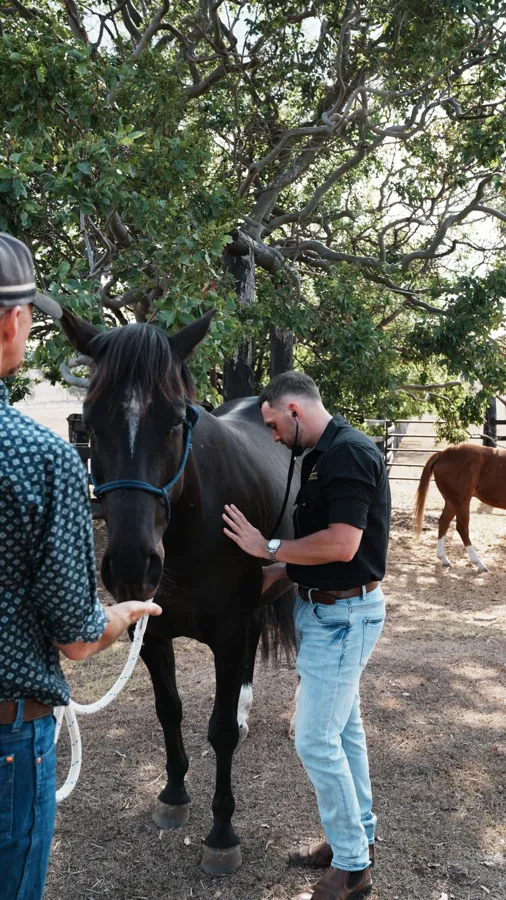
Sedation lets Christian examine every tooth, including the back molars, and treat painful problems safely — something only a veterinarian can legally provide.
Modern motorised floats reduce sharp enamel points and correct overgrowths quickly and precisely, with less stress for the horse.
Each visit records what was found and done, so changes can be tracked between visits.
What a dental visit covers
Signs your horse's teeth need attention
How a visit works
Tell us about your horse and what you've noticed. Routine work is booked around Christian's Toowoomba and Lockyer Valley days.
The vehicle carries diagnostic, dental and treatment equipment, so most work happens on the day in your horse's own yard.
You leave the visit knowing what was found, what it means for your horse's work, and what happens next.
Questions
Only a registered veterinarian can sedate your horse, use pain relief, extract teeth and diagnose and treat dental disease. Sedation is what allows the back of the mouth to be examined and treated properly.
In almost all cases yes — it's safer for the horse and allows a complete examination. Christian will assess each horse on the day. Allow a couple of hours before feeding again after sedation.
Yes, and it keeps the cost per horse down. Agistment centres, studs and racing stables can book a dental day — call to arrange.
As a rule every 6 to 12 months for horses in work. Christian will recommend an interval for each horse based on what's found.
Regular dental care is one of the cheapest ways to keep a horse eating, comfortable and working well.
Contact
Other services