A proper work-up, not a guess
Full history, hands-on palpation, trot-ups on hard and soft ground, and flexion tests — assessed the way a performance horse needs to be assessed.

Lameness & sports medicine · Toowoomba · Darling Downs · Lockyer Valley
If your horse is short, uneven, not tracking up or just not performing, Dr Christian Bowden-Betts comes to you with the equipment to find out why — and a plan to get the horse back in work.
Mobile vet · Monday to Friday, business hours · Dr Christian Bowden-Betts BVSc
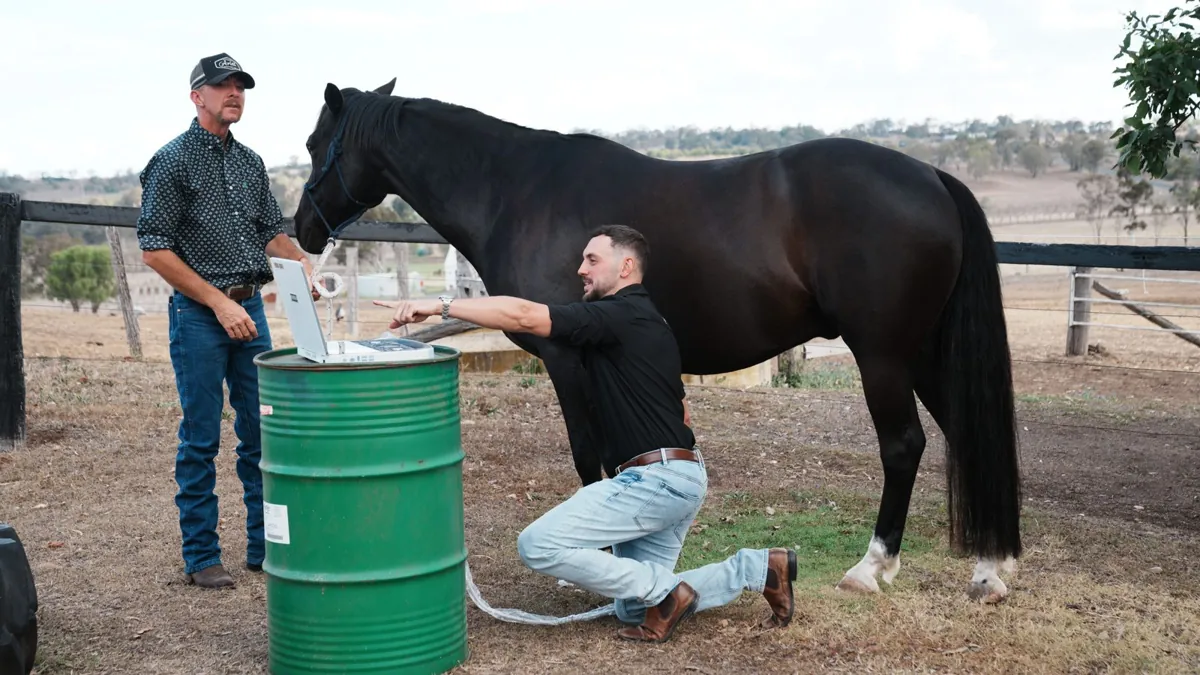
Full history, hands-on palpation, trot-ups on hard and soft ground, and flexion tests — assessed the way a performance horse needs to be assessed.
Diagnostic blocks localise the pain to a region before any treatment is considered, so you're treating the actual problem.
Every recommendation is made with the horse's discipline, workload and competition calendar in mind.
What a lameness visit covers
When to call
How a visit works
Tell us about your horse and what you've noticed. Routine work is booked around Christian's Toowoomba and Lockyer Valley days.
The vehicle carries diagnostic, dental and treatment equipment, so most work happens on the day in your horse's own yard.
You leave the visit knowing what was found, what it means for your horse's work, and what happens next.
Questions
No. The examination is done at your property. A firm, level area to trot the horse up on (a driveway, arena or hard-standing) is ideal, plus somewhere soft to lunge if possible.
Christian will tell you on the day what imaging, if any, is needed to confirm the diagnosis and will arrange or refer for it. The lameness work-up is what makes sure the right area gets imaged.
Allow around one to two hours. Multi-limb or subtle lameness can take longer, especially if several nerve blocks are needed to localise the problem.
Yes — pre-purchase examinations are available. Mention it when you book so enough time is set aside.
Lameness rarely fixes itself and the earlier it's looked at, the simpler the answer usually is.
Contact
Other services